Pulse Points: Payment Gateways Orchestrating Transitions Across Reel Machines, Hosted Tables, and Athletic Arenas via Mobile Interfaces
Xander Müller · Jun 19, 2026

Pulse Points: Payment Gateways Orchestrating Transitions Across Reel Machines, Hosted Tables, and Athletic Arenas via Mobile Interfaces
Payment gateways serve as the central mechanisms that link reel machines, hosted tables, and athletic arenas through mobile interfaces, allowing users to move funds across these formats without interruption. Data from industry reports indicate that these systems process transactions in real time, updating balances as players shift from one category to another on their devices.
Mobile Interfaces as the Connecting Layer
Applications built for mobile devices handle the display of reel machines alongside live table feeds and sports event streams, yet the underlying payment gateways determine how quickly funds transfer between these sections. Observers note that integration occurs through standardized protocols that verify each transaction before the interface updates the available balance for the next activity. In June 2026 figures from multiple operators showed average processing times under three seconds for cross-format movements, supporting continuous engagement across categories.
Those who examine transaction logs find that gateways apply the same security checks whether the destination is a reel spin, a live dealer seat, or an in-play sports wager. The uniformity reduces friction and keeps session data consistent regardless of the chosen format.
Transaction Flows Across Game Types
Reel machines require rapid, small-value transfers that gateways route through dedicated channels optimized for high volume. Hosted tables, by contrast, often involve larger stakes and longer confirmation windows, while athletic arenas demand immediate settlement during live events. Payment systems accommodate all three by maintaining separate ledgers that synchronize in the background, so a withdrawal from one area appears instantly available in another.
Studies conducted by the Canadian Gaming Association reveal that operators using unified gateways report fewer abandoned sessions when users move between formats mid-activity. The same research highlights that error rates drop when a single verification layer covers every transition instead of separate processors for each category.
Regulatory and Technical Standards in 2026
Authorities in various jurisdictions require gateways to maintain audit trails that cover every movement between reel machines, hosted tables, and sports markets. These records must remain accessible for review, and operators must demonstrate that funds cannot be altered during the switch. Technical standards updated earlier in the decade emphasize encryption and tokenization for all mobile-initiated transfers, a requirement that applies equally to every vertical.
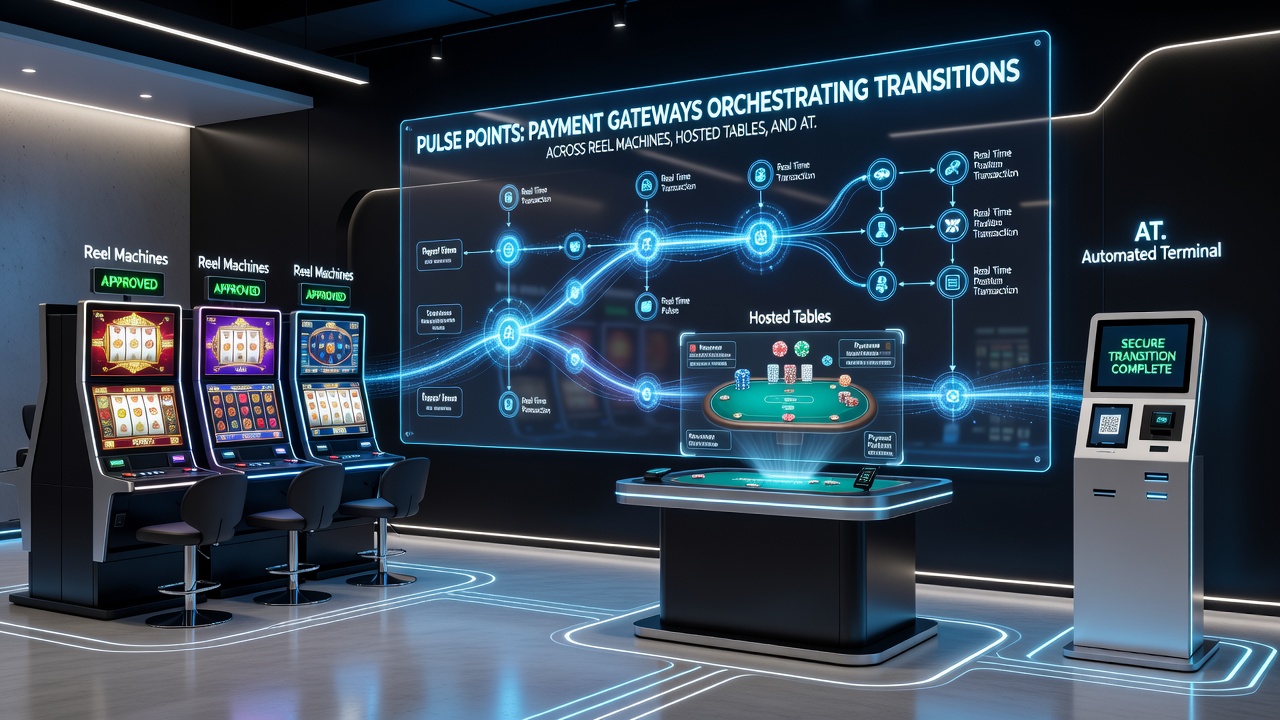
One study published by researchers at the University of Nevada, Las Vegas examined gateway performance across multiple platforms and found that systems handling mixed-format traffic achieved higher throughput when they employed dynamic routing rather than fixed pathways. The findings indicated that adaptive routing allowed operators to manage peak loads without separate infrastructure for each game type.
Case Examples from Different Regions
In Australia, several operators adopted gateways that connect reel machines directly to sports markets within the same mobile session, resulting in documented increases in average session length according to reports issued by state regulators. Similar patterns appear in parts of Europe where live table integration requires the same payment layer to support both scheduled and spontaneous table entries.
Take one operator in Singapore that implemented a gateway capable of handling instant top-ups for athletic arena wagers while simultaneously managing table game buy-ins; transaction volume across formats rose steadily through the first half of 2026. The configuration allowed users to fund a sports bet immediately after leaving a hosted table without re-entering payment details.
Security and Compliance Mechanisms
Gateways incorporate multi-factor authentication that travels with the user across all three categories, ensuring that each transition meets the same verification standard. Fraud detection algorithms monitor patterns that span reel play, table sessions, and sports activity, flagging anomalies regardless of format. Industry organizations such as the American Gaming Association have published guidelines that recommend these cross-format monitoring practices as baseline requirements.
Those who've reviewed compliance documentation observe that operators must demonstrate equal protection levels for every vertical, eliminating any perception that one format receives lighter scrutiny than another. The approach maintains consistency and simplifies regulatory reporting.
Conclusion
Payment gateways continue to function as the operational core that enables movement between reel machines, hosted tables, and athletic arenas on mobile interfaces. Technical standards, regional regulations, and performance data all point to integrated systems as the prevailing model. As platforms expand their offerings, the same gateways are expected to absorb additional categories while preserving teh speed and security already established across existing formats.