Bridging Player Queries Across Formats: Escalation Systems in Mobile Slot Events, Dealer Streams, and Sports Markets
Jordan Foster · Aug 21, 2026
Bridging Player Queries Across Formats: Escalation Systems in Mobile Slot Events, Dealer Streams, and Sports Markets
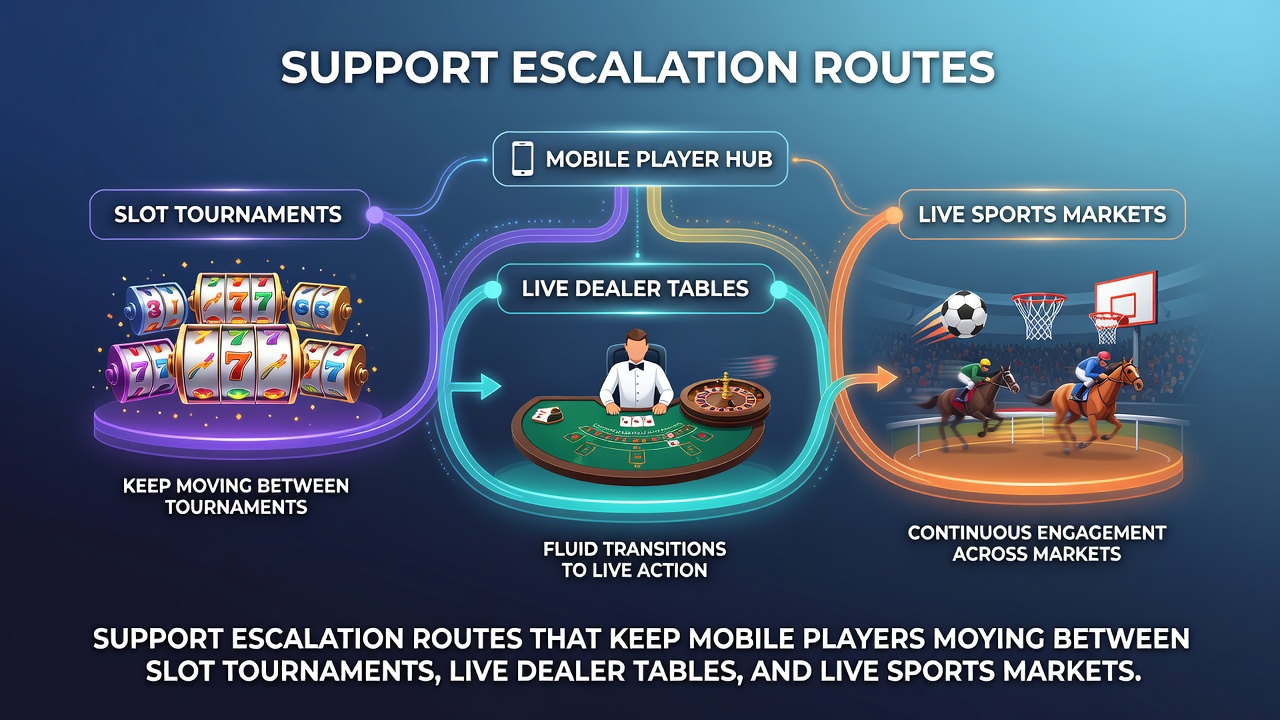
Support escalation routes form the backbone that lets players maintain activity when they move from slot tournaments into live dealer tables and onward to live sports markets on mobile devices. These routes operate through defined tiers that begin with automated responses and advance to specialized agents trained in cross-format issues. Data from industry reports indicate that operators who implement structured escalation maintain higher session continuity rates during format switches.
Tiered Response Structures in Mobile Environments
Initial contact points rely on in-app chatbots that handle basic queries about tournament rules or bet placements. When a player encounters a problem that spans multiple formats, such as a bonus that applies across slots and sports but fails during a live dealer transition, the system routes the query to level-two agents. These agents access unified player histories that track activity across all three areas. Observers note that this handoff process typically completes within two minutes when protocols follow established sequences.
Level-three escalation involves technical specialists who coordinate with backend teams responsible for real-time feeds in dealer rooms and odds engines in sports markets. August 2026 updates to mobile frameworks introduced shared dashboards that display slot progression, table session logs, and live event data simultaneously. This integration allows agents to resolve issues like interrupted tournament entries that affect subsequent live table access without requiring the player to restart the app.
Integration Points Between Game Formats
Players often shift from slot tournaments that feature timed rounds into live dealer tables where table minimums apply, then into sports markets during overlapping events. Escalation routes account for these shifts by embedding context tags in each ticket. A query about a slot jackpot that carries over to sports wagering receives priority routing to agents familiar with both mechanics. Research indicates that such tagging reduces repeat contacts by linking related transactions across platforms.
According to findings from the American Gaming Association, mobile operators that link escalation databases across formats report fewer drop-offs during peak crossover periods. The same reports highlight how agents trained on all three verticals resolve multi-format complaints faster than those limited to single categories. European regulators in several jurisdictions require similar cross-training as part of licensing conditions for operators handling live streams and event betting.
Technical Triggers and Routing Logic
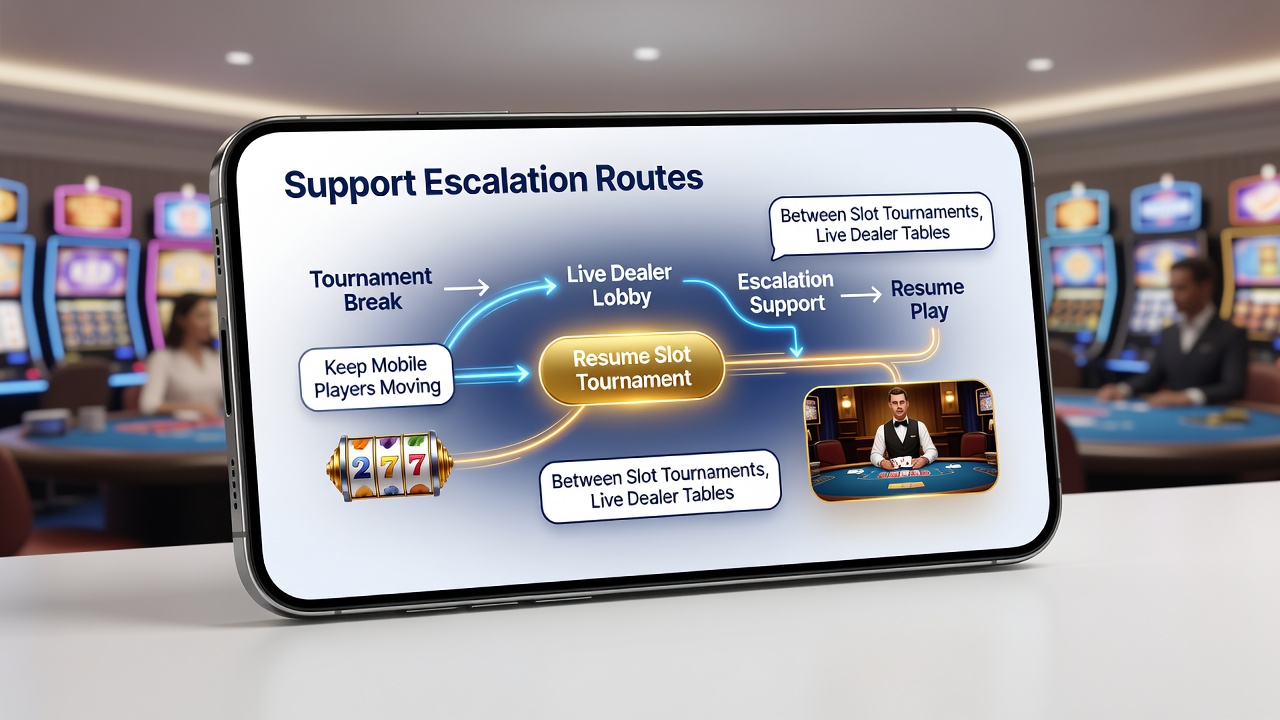
Automated triggers activate when a player attempts to carry a slot tournament credit into a live dealer session or places a sports bet immediately after a table disconnection. These triggers generate tickets that include device logs, session timestamps, and prior support interactions. Agents receive alerts through mobile-optimized dashboards that prioritize cases involving active events, such as ongoing tournaments or live matches. Studies from university gaming research centers show that priority weighting based on active playtime improves resolution times for time-sensitive queries.
Escalation paths also incorporate payment verification steps when disputes involve funds moving between formats. A withdrawal request tied to winnings from sports markets after a slot bonus playthrough follows a dedicated route that verifies compliance across both areas before advancing. This prevents delays that could interrupt a player's movement into subsequent live dealer rounds.
Training and Knowledge Base Requirements
Support teams maintain knowledge bases updated with rules for slot tournaments, dealer procedures, and sports market specifications. Agents complete modules that cover common transition points, including how tournament leaderboards interact with live table seating and how in-play sports bets affect available dealer tables. Data from operator internal reviews reveal that comprehensive training correlates with lower escalation volumes at higher tiers.
External audits conducted by independent bodies confirm that effective routes include feedback loops where resolved cases update the automated system. This reduces future escalations for similar issues, such as timing mismatches between slot rounds and sports event starts. Those who have examined these systems find that feedback incorporation strengthens continuity across the three formats.
Conclusion
Escalation routes that connect slot tournaments, live dealer tables, and sports markets rely on tiered structures, shared data access, and cross-format agent training. These elements work together to keep mobile players engaged during transitions. Implementation of these routes follows patterns documented in industry reports and regulatory guidelines from multiple regions, supporting sustained activity across diverse gaming options.